



Author Archives: news

  1. UK Treasury launches consultation into business energy efficiency tax policy

    Leave a Comment

    The Treasury has revealed plans to create a new energy efficiency tax system where a single business or organisation faces one tax and one reporting scheme, a news report suggests.

    As part of these plans, the government will abolish the CRC (Carbon Reduction Commitment), the scheme in which large energy users in the public and private sectors are required to buy allowances for every tonne of carbon they emit.

    The policy landscape has been criticised by a number of organisations over its complexity and for diverting resources away from on-the-ground delivery of energy efficiency improvements. The UK Green Building Council (UK GBC) was one of the first organizations to answer the Treasury’s consultation.

    Richard Griffiths, Senior Policy Advisor at the UK Green Building Council, said: “Moving to a position where organisations are faced with just one key reporting scheme should help to free up organisations’ resources and allow them to focus on delivering energy savings, rather than administration. Likewise, rationalising the tax regime could provide a clearer spur for action, and help to kick-start commercial retrofit activity after a few relatively flat years.

    “But neither of these things will, alone, drive the scale of change that we need to reduce emissions from our buildings. To do that, we need new incentives that significantly strengthen the case for businesses to not only identify energy saving opportunities but put them into action, and so it’s encouraging to hear that Government is open to new ideas in this area, especially in the light of recent cuts to support for renewables.”

    HeatingSave – the perfect Building Energy Management System for cutting emissions in new and existing buildings

    If you’re quite worried about future developments in terms of energy management and costs, and you plan to implement an energy costs reduction plan for your business, the best place to start is HeatingSave, since our solution will allow you to actually save between 20 and 30+ percent from your monthly energy bills.

    HeatingSave grants energy managers an extensive level of control over the building’s heating patterns, meaning that heating will not be on during weekends or holidays unless the building is actually in use. The system also enables automatic occupancy detection allowing the temperature to be reduced to a background when areas are not used and quickly brought up to temperature when they are being used.

    It’s also very important to mention that HeatingSave can take an automatic decision on whether to use electricity or gas for heating during summer, and also enables users to set a night setback temperature, reducing the night heating by a few degrees to still keep 24/7 operations warm whilst saving energy and money.

    If you’re already interested in what HeatingSave has in store and you’d like to find out more on the matter, just get in touch, our dedicated product team will be more than happy to answer all of your questions and queries.

  2. Households face potential hikes of up to 300 pounds on their energy bills

    Leave a Comment

    Households across the UK are now facing potential hikes of more than 300 pounds on their energy bills as multiple fixed-rate tariffs are coming to an end, a recent news report has been able to reveal.

    No less than 24 such deals have come to an end this week, including offers from British Gas, ScottishPower and First Utility, with customers being automatically transferred to their supplier’s standard variable tariff, which is typically far less competitive.

    While these hikes will amount for somewhere in the vicinity of £150, according to data from a major price comparison website, others will fare far worse. For example, First Utility customers in the Norweb region, which includes Manchester and Liverpool, are facing hikes of 25% or £312.

    The increases will come just as the costly winter months approach, with energy usage likely to be higher than usual if predictions for the coldest winter in 50 years prove correct.

    HeatingSave – save energy and money regardless of supplier

    Building Energy Management Systems are capable of delivering extensive monitoring and control options, compared to basic controls. They typically employ data from a variety of sources (boiler flow and return sensors, internal and external temperature sensors, occupancy sensors, humidity sensors, etc.), and enable the perfect optimization of a building’s boiler-based central heating system.

    If you’d like to find out more about the savings enabled by the HeatingSave Building Energy Management System, just contact our dedicated product team, they’ll be more than happy to answer all of your questions and queries.

  3. Heat meters are an excellent monitoring tool for district networks

    Leave a Comment

    Heat meters could potentially provide extensive benefits for both suppliers and customers connected to district heating networks, a recent news report in the local media has been able to reveal.

    Participants at an ENER-G Switch2 seminar in London were told by industry experts that using meters in district heating networks can help increase efficiency, reduce consumption and tackle fuel poverty.

    District heating network is the distribution of thermal energy in the form of steam, hot water or chilled liquids from a central source of production to multiple buildings.

    Customers must also be billed using actual meter readings rather than estimates at least once a year and anyone requesting electronic billing should be invoiced quarterly.

    HeatingSave – the perfect diagnostics and monitoring tool for heat meters and networks

    HeatingSave has a proven record of delivering extensive monitoring features, our existing customers praising its efficiency in detecting errors within their buildings’ heating systems or even their structure.

    The system includes highly-sensitive sensors designed to constantly monitor the temperatures within each heating zone which then allows HeatingSave to make small adjustments to keep each room comfortable without wasting fuel and money.

    Beside their mission-critical role in the HeatingSave system’s functionality, these sensors, coupled with our powerful analysis and monitoring software can also be used as a diagnostic tool, offering administrators useful insights into possible faults that might affect the overall – either of the existing heating system (boilers, pumps, etc.) or of the building itself.

    If you’d like to find out more about the savings enabled by the HeatingSave Building Energy Management System, just contact our dedicated product team, they’ll be more than happy to answer all of your questions and queries.

  4. Save energy and money by detecting possible faults in your building’s heating system

    Leave a Comment

    Detecting a possible fault in your building’s heating system could potentially save a lot of energy money on the long term, but having the right tools for the job is essential, researchers from Drexel University in the United States have argued.

    Jin Wen, PhD, an associate professor in the College of Engineering and co-director of the Building Science & Engineering Group, is developing a powerful tool that can analyze the big data generated by various components in building control systems—thermostats, air and water flow sensors, and energy meters for example—alert building operators when there is a problem, which is often difficult to notice without assistance, and suggest options for fixing it.

    “Operators deal with a lot of raw data from sensors and control systems, they’re constantly getting updates and fault detection warnings, but there is so much to process that it’s hard to know where to start and what the proper solution is for these problems,” Wen said. “It’s as if a doctor just hands you a list of test results and expects you to interpret them yourself, rather than identifying the source of the problem and advising you as to how to improve your health. We want to process the raw data and give operators a diagnosis and some possible solutions—instead of a mountain of readings and warnings.”

    HeatingSave – the perfect diagnostics and monitoring tool for your building’s heating system

    HeatingSave has a proven record of delivering extensive monitoring features, our existing customers praising its efficiency in detecting errors within their buildings’ heating systems or even their structure.

    The system includes highly-sensitive sensors designed to constantly monitor the temperatures within each heating zone which then allows HeatingSave to make small adjustments to keep each room comfortable without wasting fuel and money.

    Beside their mission-critical role in the HeatingSave system’s functionality, these sensors, coupled with our powerful analysis and monitoring software can also be used as a diagnostic tool, offering administrators useful insights into possible faults that might affect the overall – either of the existing heating system (boilers, pumps, etc.) or of the building itself.

    If you’d like to find out more about the savings enabled by the HeatingSave Building Energy Management System, just contact our dedicated product team, they’ll be more than happy to answer all of your questions and queries.

  5. New scheme launched to help North Lanarkshire residents save on their gas and electricity bills

    Leave a Comment

    Residents in North Lanarkshire will be able to cut their gas and electricity bills if they decide to join a new scheme set up by their local council, a recent news report has been able to reveal.

    North Lanarkshire Council’s previous Big Switch scheme, which was opened in March, has already helped residents save a combined total of over £205,000 on their energy bills by switching suppliers.

    And now, more households could benefit from the same special rates by joining Big Switch 2. The scheme is open to all households and uses collective switching to help drive down energy costs. Registration is open now and closes on 12 October.

    Des Murray, head of housing property, said: “Our scheme makes it quick and simple for everyone to potentially save on their bills.

    “Our residents who took part in our first Big Switch campaign are reaping the rewards to the tune of £313 on average.

    “We launched the scheme earlier this year and more than 1,700 households took part. The savings some people made were incredible with some saving as much as £800 per annum. Since then we’ve had lots of people asking how they could take part so we decided to launch the Big Switch 2.

    “With winter just around the corner, there has never been a better time to cut your costs.”

    HeatingSave – helping you slash your energy bills regardless of supplier

    Building Energy Management Systems are capable of delivering extensive monitoring and control options, compared to basic controls. They typically employ data from a variety of sources (boiler flow and return sensors, internal and external temperature sensors, occupancy sensors, humidity sensors, etc.), and enable the perfect optimization of a building’s boiler-based central heating system.

    If you’d like to find out more about the savings enabled by the HeatingSave Building Energy Management System, just contact our dedicated product team, they’ll be more than happy to answer all of your questions and queries.

  6. Energy-saving buildings and climate-smart cities could help save $22tn around the world, economists argue

    Leave a Comment

    Expanded public transit, energy-saving buildings, and better waste management could help cities and countries around the world save up to $22tn and avoid the equivalent in carbon pollution of India’s entire annual output of greenhouse gasses, according to leading economists.

    The Global Commission on Climate and Economy, an independent initiative by former finance ministers and leading research institutions from Britain and six other countries, found climate-smart cities would spur economic growth and a better quality of life – at the same time as cutting carbon pollution.

    If national governments back those efforts, the savings on transport, buildings, and waste disposal could reach up to $22tn ($14tn) by 2050, the researchers found. By 2030, those efforts would avoid the equivalent of 3.7 gigatonnes a year – more than India’s current greenhouse gas emissions, the report found.

    The report called on the world’s leading cities to commit to low carbon development strategies by 2020.

    HeatingSave – helping drive down energy consumption and emissions in new and existing buildings

    You can now ensure a low carbon future for your home or business with the HeatingSave building energy management system which cuts heating bills by typically 20% to 30%.

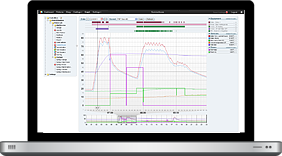
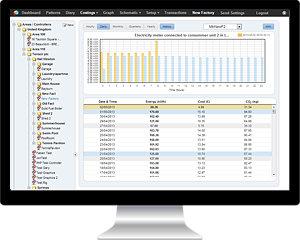
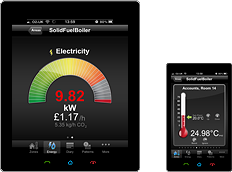
    HeatingSave’s PC software shows you when and where you use the most energy. Our Energy Monitor provides the ability to view your current energy usage, along with many other statistics all on a very easy to use monitor screen. It keeps you posted on what is going on with your energy system, where you are using the most energy and where you are spending the most money.

    If you’d like to find out more details on all the features HeatingSave has in store, just contact our dedicated product team, they’ll be more than happy to provide you with all the necessary information.

  7. Mortgage rates should be cheaper for owners of energy efficient homes

    Leave a Comment

    Owners of energy efficient homes should be given cheaper mortgage rates, since current estimates of energy costs could be inaccurate by as much as £45,000 for a 25-year mortgage for an efficient home, a report launched by UK Green Building Council (UK-GBC) and the University College London’s Energy Institute has suggested.

    The research suggests that mortgage lenders could “significantly improve” their calculations if they use current energy data such as the Energy Performance Certificate (EPC) rating for a property. Currently, housing-related energy costs account for 7.2% of a household’s weekly expenditure in the UK.

    Richard Griffiths, Senior Policy Advisor at UK-GBC, Co-Author said: “Government wants lenders to be more responsible yet this work shows that they are currently failing to account for the likely energy costs faced by would-be borrowers. As a result lenders are potentially lending more money than buyers of inefficient properties can truly afford and vice-versa for efficient properties.

    “If banks took some quite straightforward steps to address this – by including data on properties’ energy efficiency and making more accurate estimates of their likely energy bills – they would reduce the risks associated with their lending while helping to create the conditions that would see energy efficient properties rise in value compared to their inefficient counterparts.”

    HeatingSave – making even older homes more energy efficient

    The HeatingSave Building Energy Management System helps customers save more than 30% on their bills by optimizing any heating system’s overall functionality. This is done by taking into account a variety of factors, such as internal and external temperatures, occupancy, time of the year, the particular characteristics of installed boilers, etc. All of the data is used in order to determine the best heating patterns for the various heating zones within any building, using our proprietary heat-loss algorithm.

    The end result is that users still get a very good level of comfort, while in the same time saving energy and money in the process.

    If you’d like to find out more details on all the features HeatingSave has in store, just contact our dedicated product team, they’ll be more than happy to provide you with all the necessary information.

  8. Environmental group brokers cross-party deal to make Scotland’s buildings more energy efficient

    Leave a Comment

    An environmental group has managed to broker a cross-party deal to make Scotland’s buildings more energy efficient, a recent media news report has been able to reveal.

    WWF Scotland has managed to convince all the main political parties in Scotland to sign up to its climate change manifesto agreement, pledging to reduce emissions by 42% in the next five years.

    They have committed to a national infrastructure programme to make buildings more energy efficient and a low carbon transport system, as well as a plan to cut emissions from the electricity generation and food sectors.

    Lang Banks, director of WWF Scotland, said: “It’s great to know we live in a country where our parliamentarians have long moved on from debating whether climate change is happening to competing about how we secure the benefits of a low carbon economy.

    “In the run up to next May’s election voters will be keen to learn how each of the political parties will use their plans for tackling climate change to create jobs, improve health and reduce inequality.”

    HeatingSave – helping companies and households cut their emissions and become more energy efficient

    Building Energy Management Systems are capable of delivering extensive monitoring and control options, compared to basic controls. They typically employ data from a variety of sources (boiler flow and return sensors, internal and external temperature sensors, occupancy sensors, humidity sensors, etc.), and enable the perfect optimization of a building’s boiler-based central heating system.

    HeatingSave comes packed with a number of features to prevent employees from adjusting the heating controls and leaving them in setting that can waste fuel. The keypad and display on the front of the controller has two levels of password protection.

    These passwords can be changed by authorized personnel locally or centrally using the PC software. The password programming meets the requirements laid down by the Carbon Trust, and the PC software is user ID and password protected too.

    Naturally, employees do have the right to set the ambient temperature at a value that best suites their needs, and HeatingSave manages this situation by firstly getting the temperature right so people don’t feel too hot or cold. If employees do feel too cold, they can hit a button to increase the room temperature. The heating will be turned up for a while BUT will then automatically turn back – keeping the employee at the right comfort temperature – and saving the employer on their fuel bill.

    If you’d like to find out more about the savings enabled by the HeatingSave Building Energy Management System, just contact our dedicated team, they’ll be more than happy to answer all of your questions and queries.

  9. Energy efficiency schemes should focus on the poor, researchers argue

    Leave a Comment

    The energy efficiency schemes launched across the US should focus primarily on people in “fuel poverty”, a researcher from the Energy Policy Institute in Chicago has argued recently.

    His research paper suggests that offering people money to inconvenience themselves on behalf of the environment will be taken most seriously by the poor.

    The report recommends future programmes to target lower-income customers directly, particularly in areas with hot summers.

    HeatingSave – helping tackle fuel poverty by optimizing energy use

    Significant savings can only be truly achieved when implementing a solution designed to optimize energy consumption across the board, whether we’re talking about electricity or gas.

    This is exactly where HeatingSave system might prove its worth, since our solution allows customers to achieve immediately savings of up to 30%+ on their energy bills. This is achieved by optimizing the energy consumption levels within any building with the help of an advanced heat-loss algorithm that creates a specific profile for any building and based on that, switches heating on later if its warm and off earlier if its cold.

    It also automatically adjusts your boiler depending on how warm it is outside – save up to another 10%.

    Furthermore, the system also offers an advanced automatic occupancy detection system that allows the temperature to reduce to a background when areas are not used and quickly brought up to temperature when they are being used.

    If you’d like to find out more about the HeatingSave Building Energy Management System, then simply contact our dedicated product team, they’ll help you get all the necessary information and answer all of your queries.

  10. Businesses urged to check ESOS compliance before deadline

    Leave a Comment

    Businesses across the UK are being urged to asses their energy efficiency and hit the Energy Savings Opportunity Scheme (ESOS) deadline, a recent news report has been able to reveal.

    The Environment Agency – the scheme administrator – he said only just over 100 businesses have complied so far out of 14,000 organisations. ESOS is a mandatory energy assessment scheme for organisations in the UK. If they don’t assess their energy use, they may have to pay a penalty of up to £90,000.

    According to the Department of Energy & Climate Change (DECC), implementing some of the efficiencies highlighted by ESOS assessments could save businesses more than £250m a year by reducing consumption by just 0.7%. And where businesses are prepared to invest in measures with a payback period of two years or less, this figure increases to £1.6bn a year.

    HeatingSave – saving you energy and money and helping your firm be ESOS compliant

    Building Energy Management Systems are capable of delivering extensive monitoring and control options, compared to basic controls. They typically employ data from a variety of sources (boiler flow and return sensors, internal and external temperature sensors, occupancy sensors, humidity sensors, etc.), and enable the perfect optimization of a building’s boiler-based central heating system.

    If you’d like to find out more about the savings enabled by the HeatingSave Building Energy Management System, just contact our dedicated product team, they’ll be more than happy to answer all of your questions and queries.