


Author Archives: news

  1. The BRE introduces national quality mark for new housing

    Leave a Comment

    The Building Research Establishment (BRE) has announced the launch of a new national quality mark for new housing that will give home buyers and renters a clear indication of the quality and performance of a new home.

    Using a simple 5-star rating, the Home Quality Mark will illustrate the home’s overall running costs at a time when average energy bills top £1000 and will also show the impact of the home on the occupant’s health and wellbeing as homes become more airtight, respiratory conditions rise and our population gets older.

    The new mark will also demonstrate the home’s environmental footprint and its resilience to flooding and overheating in a changing climate. Additionally the mark will evaluate the digital connectivity and performance of the home as our reliance on new technology becomes ever more critical.

    Homes built to the mark will be independently evaluated by licensed BRE Global assessors and developments built to standards like Passivhaus and the Code for Sustainable Homes can be credited under the mark where compatible criteria apply.

    Efficient and effective Building Energy Management Systems are capable of delivering extensive monitoring and control options, compared to basic controls. They typically employ data from a variety of sources (boiler flow and return sensors, internal and external temperature sensors, occupancy sensors, humidity sensors, etc.), and enable the perfect optimization of a building’s boiler-based central heating system.

    If you’d like to find out more about the savings enabled by the HeatingSave Building Energy Management System, just contact our dedicated product team, they’ll be more than happy to answer all of your questions and queries.

  2. Close to half of British businesses have never switched energy suppliers, research reveals

    Leave a Comment

    Almost half (47%) of all UK businesses have never changed energy suppliers while an astounding 20% are not even aware that they can do so, which means that it’s harder for them to cut energy usage, a recent market survey has been able to reveal.

    The survey of more than 2,000 small business owners and decision makers also found that 75% – or 3.9 million – of firms think they pay too much for gas and electricity and almost the same number know for a fact that savings could be made.

    Switching energy suppliers or tariffs are seen as a “hassle” by 28% of businesses, while nearly half (46%) fear costs and fees attached to moving to a new supplier and are “nervous about the increase in paperwork” while more than a quarter (27%) believe switching will cause a disruption to their energy supply.

    HeatingSave – helping your business cut energy usage by 20% to 30%

    Replacing your central heating clock with a HeatingSave energy and boiler management controller is the quickest way of beating those tariff rises and saving on energy costs, often paying for itself in less than a year but almost always in less than 3 years.

    HeatingSave can cut your business cut energy usage by 20% to 30% with its energy management control, as its internal microprocessor constantly calculates and improves the efficiency and savings of your central heating system.

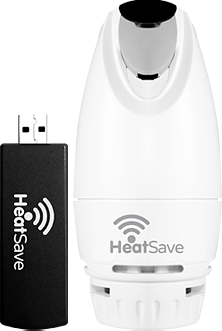
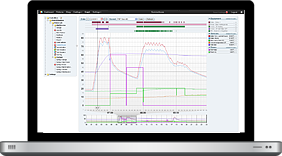
    Using HeatingSave, simply choose the room temperature and the hot water you want, and when, and HeatingSave does the rest. It works with all central heating systems – oil, gas or coal – and links up with a PC to produce reports and graphs to fashion a powerful and complete energy management system.

    The system is backed by the Carbon Trust and the Energy Savings Trust.

  3. New guidelines released to help energy managers bridge the energy performance gap in buildings

    Leave a Comment

    Facilities managers and building operators searching for best-in-class solutions designed to bridge the energy performance gap in their building portfolio will receive a helping hand from the BRE Trust and the Energy Services and Technology Association in the form of a set of guidelines published in their latest report – “Bridging the performance gap – understanding predicted and actual building operational energy”.

    Currently, operators of commercial and public sector buildings have two indicators of a buildings energy performance available to them. The first is an Energy Performance Certificate (EPC) rating which is a theoretical assessment of a buildings energy needs in optimum conditions. The second is a Display Energy Certificate (DEC) which is based on actual energy consumption. The DEC is almost always higher due to occupant behaviour, non-standard hours of operation, and unregulated loads such as IT and office equipment.

    In the report, author Andy Lewry explains how the UK Government’s Green Deal Assessment tool – GD-SBEM – can be used to reconcile the differences between the two sets of information. ‘By inputting both theoretical and actual consumption data, GD-SBEM can help building operators really understand the energy use in a building, highlighting where improvements can be made and the costs and related payback periods of investment. The tool can also help larger organisations report against the requirements of the UK government’s Energy Savings Opportunity Scheme (ESOS).

    Accompanying the report is a sister publication: Producing the business case for investment in energy efficiency (IP2/15). This offers practical guidance to building operators on how to make a sound financial case for investing in energy efficiency improvements that will bridge the energy performance gap.

    HeatingSave – high-performance BEMS with monitoring features guaranteed to deliver quick ROI

    HeatingSave Building Energy Management Systems are capable of delivering extensive monitoring and control options, compared to basic controls. They typically employ data from a variety of sources (boiler flow and return sensors, internal and external temperature sensors, occupancy sensors, humidity sensors, etc.), and enable the perfect optimization of a building’s boiler-based central heating system.

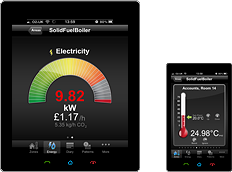
    Our Energy Monitor connects to a HeatingSave energy management system to give you the ability to view your current energy usage. Additionally, it show the amount of CO2 associated with this energy usage, all on a very easy to use monitor touch screen. Always keep up-to-date on what’s going on with your energy system, where you are using the most energy and where you are spending the most money.

    Attractive design presents the data in a smart manner using metering graphs and modern graphics.

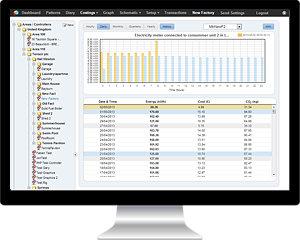
    Compare your current level of usage with past data, e.g. compare today’s data with yesterdays, or even last year’s usage data. Accurately see how much energy is currently being used, how much CO2 is being produced and most importantly, how much it is costing you. The Energy Monitor is updated in real-time so you can see energy changes instantly and keep on top of your usage with ease.

  4. Buy-to-let landlords can claim tax relief on energy efficiency measures

    Leave a Comment

    Buy-to-let landlords who decide to improve their properties’ energy efficiency levels can easily claim back tax after carrying out the works, but the deadline for the scheme is approaching fast, with little over a month to go.

    The tax relief amounts to £1,500 per property, while landlords can also access a further £5,600 of Green Deal cashback.

    Landlords have three years in which to make home improvements before new energy efficiency rules come into force. Their costs could run into tens of thousands of pounds and are most likely to affect Victorian and Edwardian properties, thought to make up 10pc of the rental market.

    Currently, landlords can claim income tax relief using the Landlords Energy Saving Allowance, but the perk is due to expire on April 6 .

    HeatingSave – easy to retrofit, can help landlords and tenants save energy and money

    The HeatingSave Building Energy Management System helps customers save more than 30% on their bills by optimizing any heating system’s overall functionality. This is done by taking into account a variety of factors, such as internal and external temperatures, occupancy, time of the year, the particular characteristics of installed boilers, etc.

    All of the data is used in order to determine the best heating patterns for the various heating zones within any building, using our proprietary heat-loss algorithm.

    HeatingSave is also approved to work and save fuel within the Energy Technology List, which is managed by the Carbon Trust on behalf of the Government. It is also approved by the Department of Energy & Climate Change and the Energy Savings Trust and was specified by the Building Research Establishment for the energy efficient homes retro-fit program, called The Greenhouse Project.

    Last, but certainly not least, it’s important to mention that HeatingSave is a component part of the Government’s Green Deal program.

    If you’d like to find out more about HeatingSave’s accreditations, just visit the dedicated section on our website, and for any other information, just get in touch with our dedicated product team.

  5. Public organizations in Scotland may have to provide reports on energy and climate change

    Leave a Comment

    A range of public organizations such as the NHS, local authorities and educational institutions in Scotland could be required to report on climate change under new plans set out by the Scottish Government, a recent news report into this matter has been able to reveal.

    The Government’s consultation is seeking views on introducing a standard reporting form, the impact of the changes in reporting climate change performance and how reports should be annually monitored.

    If approved, around 150 large public bodies including the Scottish Government would have to report on climate change.

    Scotland’s Climate Change Minister Aileen McLeod said: “The introduction of required reporting is one area where we have the power to do more to tackle climate change. This is why we are seeking views on standardising reporting for public sector bodies to enable consistent standards, continuous improvement and transparency within the public sector.”

    HeatingSave – the perfect tool for energy monitoring and management

    HeatingSave is best solution to determine the real-life energy efficiency level of any buildings, since the system fully takes into account a range of important factors as internal and external temperatures, day-to-day energy usage, occupancy, etc.

    The HeatingSave Energy Monitor (T3518) lets users see in real-time how much energy they are using in order to enable them to take immediate action and turn off equipment that has been unnecessarily left on.

    Our solution also displays the cost of the energy they are consuming, for current and previous days, together with the amount of CO2 they have produced on those days; all on a very easy to use monitor screen. This helps them always keep up-to-date and stay on top of what’s going on, where they are using the most energy and how much it is costing.

    If you’d like to learn more about how HeatingSave can help you save money on your energy bills, just contact our dedicated product team, they’ll be more than happy to answer all of your questions and queries.

  6. British retailers launch energy efficiency and saving initiative

    Leave a Comment

    Energy efficiency and energy saving options are high on the agenda for British retailers, as the British Retail Consortium (BRC) has recently launched a new initiative to enable UK retailers to improve their energy efficiency.

    With energy costs expected to increase significantly over the next five years, greater energy efficiency is vital for the long-term growth and viability of the industry, not to mention helping the fight against climate change. The BRC believes that a clearer and more accessible policy landscape can deliver great potential in energy efficiency for the future.

    The “25-in-5: Unlocking Energy Efficiency through Smart Regulation” scheme aims to harness the experience, knowledge and best practices of its members, leading to the rapid deployment of low and zero carbon technologies right across the retail industry.

    BRC Director General Helen Dickinson said: “Energy and energy efficiency are of strategic importance to Britain’s retailers. Through our 25-in-5 campaign, we believe we can build on what has been done so far to help drive energy efficiency across the retail industry, allowing our members to benefit from significant energy cost savings while at the same time making a vital contribution to the UK’s climate change and energy security goals”

    HeatingSave can help retailers save energy and money

    Building Energy Management Systems are capable of delivering extensive monitoring and control options, compared to basic controls. They typically employ data from a variety of sources (boiler flow and return sensors, internal and external temperature sensors, occupancy sensors, humidity sensors, etc.), and enable the perfect optimization of a building’s boiler-based central heating system.

    If you’d like to find out more about the savings enabled by the HeatingSave Building Energy Management System, just contact our dedicated product team, they’ll be more than happy to answer all of your questions and queries.

  7. First Utility claims cheapest tariff title

    Leave a Comment

    Customers who band together and ask for the best possible tariff could be more than £260 better off compared to those who choose to stick to their existing supplier, one of the UK’s energy suppliers believes.

    First Utility revealed that its most recent tariff stands at £892 per year for an average dual fuel household, which makes the cheapest on the market. The deal is available under the Big Deal collective switch scheme, which aims to save consumers money by asking suppliers to submit the cheapest tariff they can with reduced commission.

    The new tariff will be fixed until 31st March 2016 and is available for the first 10,000 customers until midnight on 20th February.

    HeatingSave – significant better at energy saving than any lower tariff

    The HeatingSave Building Energy Management System helps customers save more than 30% on their bills by optimizing any heating system’s overall functionality. This is done by taking into account a variety of factors, such as internal and external temperatures, occupancy, time of the year, the particular characteristics of installed boilers, etc.

    All of the data is used in order to determine the best heating patterns for the various heating zones within any building, using our proprietary heat-loss algorithm.

    The end result is that users still get a very good level of comfort, while in the same time saving energy and money in the process.

    If you’d like to find out more details on all the features HeatingSave has in store, just contact our dedicated product team, they’ll be more than happy to provide you with all the necessary information.

  8. Cardiff residents are UK’s most energy savvy, recent report can reveal

    Leave a Comment

    Saving energy and money are very high on the agenda for the residents of Cardiff, a recent survey has been able to reveal.

    Out of all the residents who participated in the survey, 87% said they would change their energy habits if it meant saving money on their bills and 37% said they would like energy saving to become a priority at home.

    The survey is part of the ‘Energy Challenge’ run by British Gas and questioned 7,400 people across the UK of which 500 were in Cardiff.

    HeatingSave is the perfect energy-saving option for home users

    Optimizing energy consumption is something every home owner should consider in order to drive down their energy bills, and this is specifically where HeatingSave could put its market-leading experience to very good use.

    The HeatingSave Building Energy Management System helps customers save more than 30% on their bills by optimizing any heating system’s overall functionality. This is done by taking into account a variety of factors, such as internal and external temperatures, occupancy, time of the year, the particular characteristics of installed boilers, etc. All of the data is used in order to determine the best heating patterns for the various heating zones within any building, using our proprietary heat-loss algorithm.

    The end result is that users still get a very good level of comfort, while in the same time saving energy and money in the process.

    If you’d like to find out more details on all the features HeatingSave has in store, just contact our dedicated product team, they’ll be more than happy to provide you with all the necessary information.

  9. Home owners in the South East require the most heat, survey reveals

    Leave a Comment

    Over 83% of homeowners living in East Anglia will leave their heating systems on for more than 8 hours a day, with close to 65 percent of all Londoners following suite, a recent survey has been able to find.

    The survey of 1000 male and female homeowners across the UK commissioned by home improvements company entu also found that more than 76% of homeowners in the South West and more than 76% of people living Yorkshire and Humber turn on the heat for up to eight hours a day.

    On the other hand, the Scottish (79%), Northern Irish (74%) and Welsh (74%) are slightly more heat conscious as they tend to use their heating up to five hours a day.

    HeatingSave optimizes your heating system, helps you save energy and money

    Running the boiler in the most efficient and effective possible manner will help households save 20 to 30%+ on their energy bills, and this is exactly where HeatingSave could put its extensive experience to very good use.

    The system is very user-friendly and, depending on specific site conditions, can even help home owners achieve savings of up to 50%.

    If you’d like to find out more details on all the features HeatingSave has in store, just contact our dedicated product team, they’ll be more than happy to provide you with all the necessary information.

  10. Green Deal Home Improvement Fund scheme extended

    Leave a Comment

    As part of the government’s drive to support the implementation of energy saving measures across UK households, the Department of Energy and Climate Change (DECC) is extending vouchers from the first release of the Green Deal Home Improvement Fund (GDHIF) until Tuesday 31 March 2015, allowing more time for millions of pounds worth of installations to be carried out.

    The one-off voucher extension applies to GDHIF vouchers that have an expiry date before 31 March and have not yet been redeemed – affecting around 3,900 voucher holders – including vouchers that have already expired. For the first release of GDHIF, which was open to applications from 9 June to 24 July, vouchers worth up to a maximum of £7,600 were on offer.

    Up to the end of December 2014, 11,061 vouchers have been paid and 13,613 measures installed through GDHIF, with £54.3 million claimed.

    The extension is effective immediately and will apply automatically to eligible voucher holders -a new voucher will not be issued. To claim, eligible householders should carry out the work and submit their voucher for redemption to the GDHIF scheme administrator by 31 March 2015 – vouchers that have been extended will not be accepted after this time. All other terms and conditions for the first release of GDHIF continue to apply to customers and installers.

    Vouchers from the second release of GDHIF which opened to applications on 10 December 2014, will not be affected and will be valid for six months as per the expiry date on the voucher.

    Secretary of State for Energy and Climate Change Ed Davey said:

    “The Green Deal Home Improvement Fund has been going like hotcakes – winter can be a difficult time to get installations done so by giving more time to voucher holders they can join over one million homes already benefitting from a warmer, cheaper winter thanks to our energy efficiency schemes.”

    HeatingSave – the perfect energy management system for your home or business

    HeatingSave is also approved to work and save fuel within the Energy Technology List, which is managed by the Carbon Trust on behalf of the Government. It is also approved by the Department of Energy & Climate Change and the Energy Savings Trust and was specified by the Building Research Establishment for the energy efficient homes retro-fit program, called The Greenhouse Project.

    Last, but certainly not least, it’s important to mention that HeatingSave is a component part of the Government’s Green Deal program.

    If you’d like to find out more about HeatingSave’s accreditations, just visit the dedicated section on our website, and for any other information, just get in touch with our dedicated product team.